
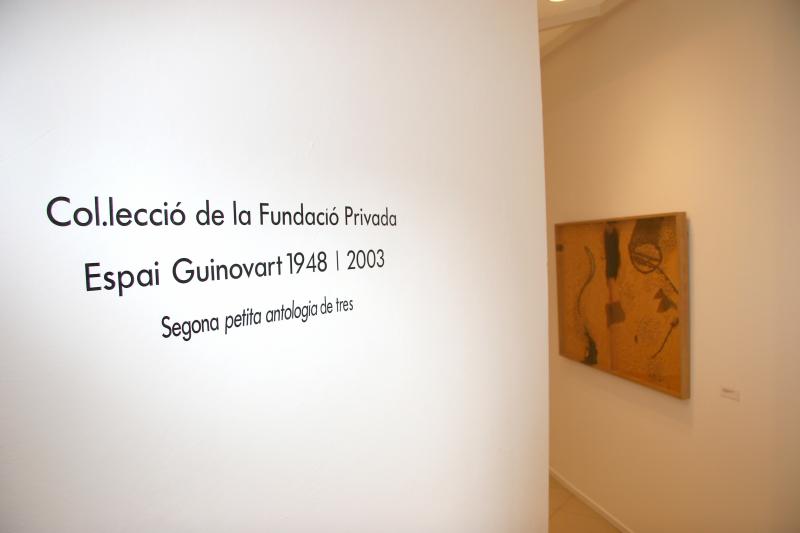
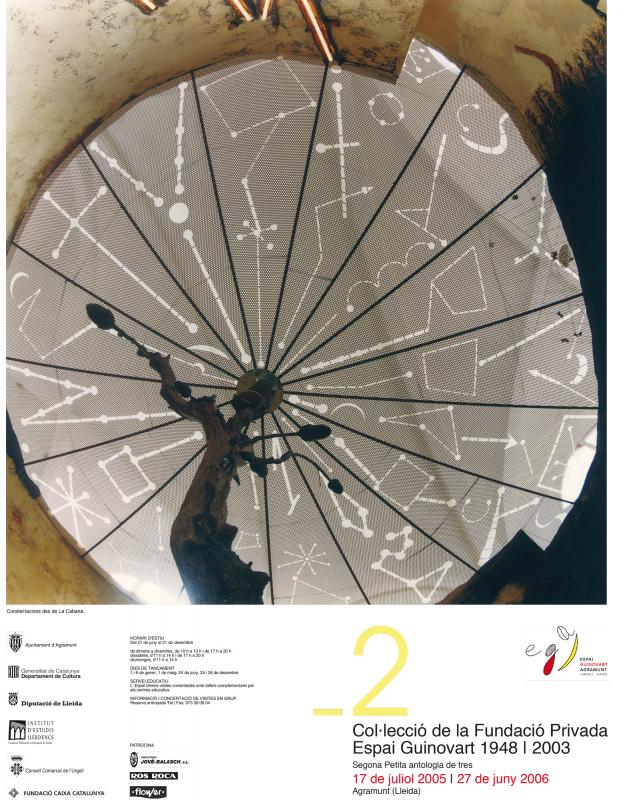
Second Little Anthology of Three
Josep Guinovart
COLLECTION OF THE PRIVATE FOUNDATION ESPAI GUINOVART D'AGRAMUNT (1948-2003)
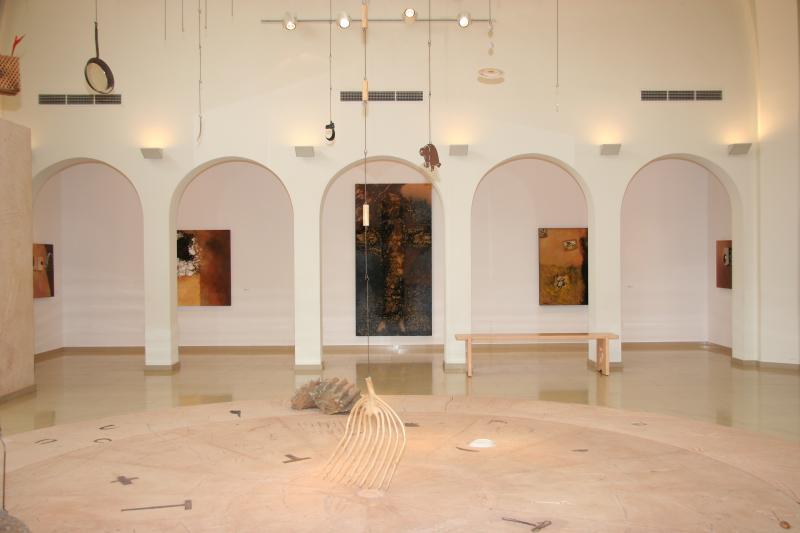
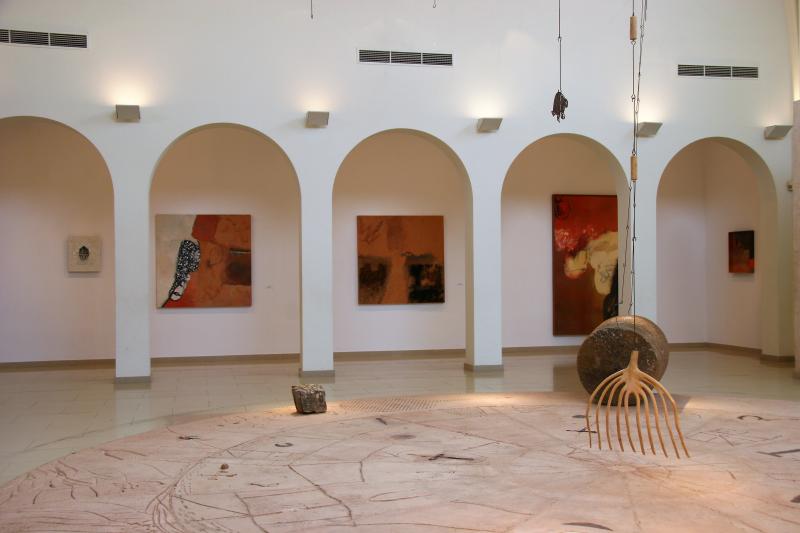
A year ago, on the occasion of the tenth anniversary of the inauguration of the Private Foundation Espai Guinovart, we presented the "First Little Anthology of Three." It was the first exhibition of a series of three that aim to present (as a "small anthologies") the permanent collection of the Foundation. As we explained then, the successive donations of Josep Guinovart have been constituting a remarkable fund that has two hundred and twenty paintings, forty-four sculptures and two installations.
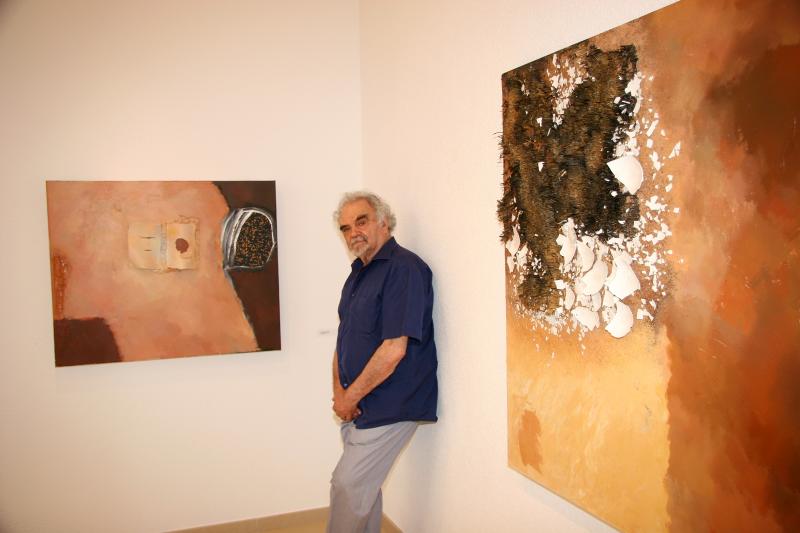
For this "Second Little Anthology of Three", we considered it interesting to return to the beginnings, to the inaugural exhibition of the year 1994 and to recover the land. Recover earth in a double sense. On the one hand, in the sense that Guinovart gave him the catalog that was then published: << The possibility of this Space gives me the enthusiasm to make coherent idea and feeling. I have not tried to make a museum, but a work that belongs to Agramunt, its surroundings, its inhabitants, in these lands and in its seasons: simplicity from the green of spring to the golden ones of summer wheat, of the stubble from the red autumn to the cool and foggy range of winter. Agramunt, more Segarra than Urgell. With the quiet mystery of the Sió Basin >> 1. The works that we now present reprise the expression of this feeling of belonging to a landscape and landscape. And partly because of the fact that many of them went to the Raost de Rostoll exhibition, presented at the Museu d'Art Jaume Morera in Lleida at the end of 2003 on the occasion of the award of the Medal Morera plastic arts prize the previous year. They are part of a series of works that, periodically (1948, 1975, 1994 and 2003), recover the experiences of Agramunt to recreate them again in a new perspective: the one that takes the passage of time. And, as Guinovart says, << [...] I was nine years old and we went to Agramunt.
This circumstance has always marked my career. My tattoo is land >> 2. But recovering the land leads us unfailingly to consider land in a second way. As an element, as the material where everything germinates and where everything goes back to the end of its cycle. And Guinovart has managed to take ownership of the land by incorporating it into his work. The stubble, grain, mud, iconography of work in the field and the life cycle with its stations have been part of the Guinean language since 1948, when he painted The Wheat Series. Because in his work, idea and feeling have come together, combining the manual work with the intellectual. As says Carles Hac Mor: << [...] Guinovart's art is mental as it is material, and vice versa. And, precisely because of this, his works, as they are, are more conceptual than those of those who do not crumble their hands because they only think, they just have ideas. Guinovart reflects through matter, hands, brush stroke, colors, shapes. Think and say what can only be thought and say through your work and the result of this >> 3. His work is a constant search for the balance between form and content. Hopefully the firm commitment of Guinovart between ethics and aesthetics also leads us to recover the Earth.